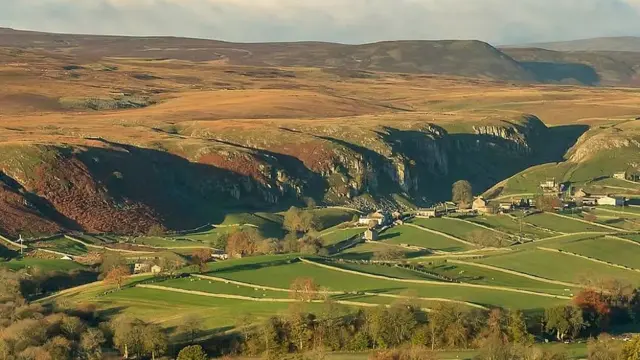
This article by Alejandro Martins, in Spanish, was published on BBC Mundo (BBC World) on 12 March 2026
https://www.bbc.com/mundo/articles/cq577x1evvyo
Crouching on the grass, in the middle of the field, Margaret Bradshaw delicately holds a treasure between her fingers.
For others it is simply a wildflower. For Bradshaw, it’s a whole world. “I see beauty and form, and I think about the story of their survival,” she told BBC Mundo.
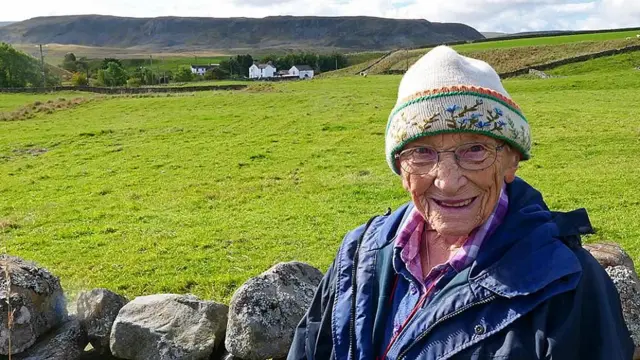
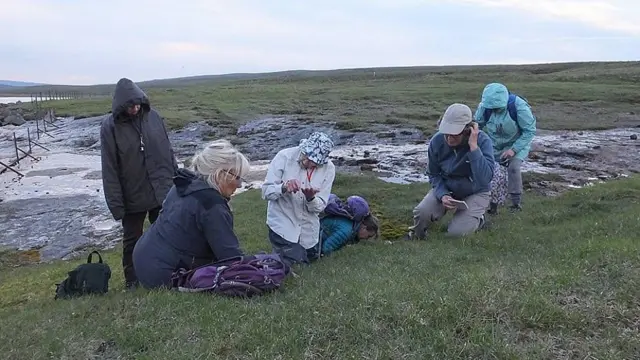
British 100-year-old botany has dedicated seven decades of her life to studying and protecting the flora of the place she lives in, the Teesdale Valley in the northeast of England. It is an extraordinary flora, with a combination of plants that cannot be found anywhere else in the UK. And that it is in severe decline, Bradshaw’s investigations revealed.
Her passion for protecting these plants and his struggle to ensure that others continue their work led botany to create a foundation at the age of 93.
At 95 she traveled more than 80 km on horseback in a campaign to raise funds. At 97 she published her first book, a catalog of the local flora.
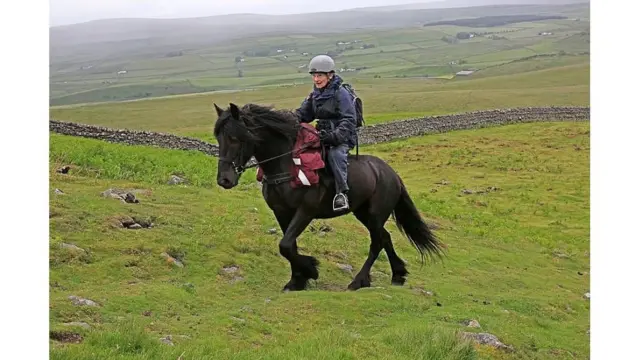
Photo: Martin Rogers
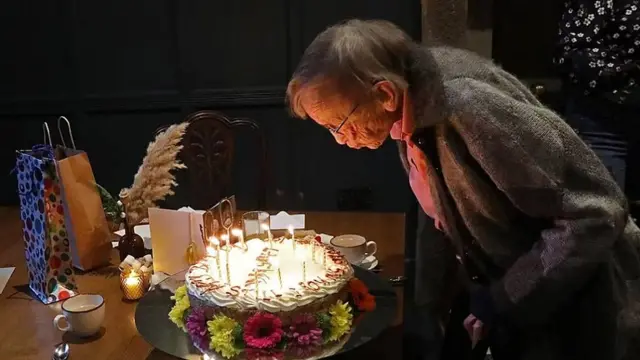
But Bradshaw’s message is not limited to the Teesdale Valley. In dialogue with BBC Mundo, the scientist invited to “look at the sky”, “savour the air” and observe what surrounds us, wherever we are.
Unique flora
Margaret Bradshaw was born in January 1926 on a farm in East Yorkshire County, more than 150 km away from Teesdale. Since childhood she had two passions: horses and botany. “As with horses, it seems that I had an instinctive interest in plants,” she said.
She first heard about Teesdale’s special flora when she was studying botany at the University of Leeds, almost 80 years ago. She decided to move to that area and study for a doctorate on a local plant at Durham University, a nearby academic centre.
Bradshaw explained that Teesdale flora includes plants whose ancestors have been there for more than 10,000 years, since the last glacial period. In her book “The Special Flora of Teesdale: Places, Plants and People”, the scientist describes an extraordinary combination of plants — alpine or Arctic on the one hand, and southern Europe, on the other — that do not grow together in any other part of British territory.
“There are a lot of rare plants, most of them are relics of the first plants that colonized this site in the post-glacial period,” she told BBC Mundo.
“The core of this collection is known as the ‘Teesdale Set’, which includes Alpine-Arctic plants alongside plants with a more southern distribution.”
In Danger
Since the 1960s, the abundance of Teesdale flora has declined by 54% on average and some 28 species are in danger of extinction.
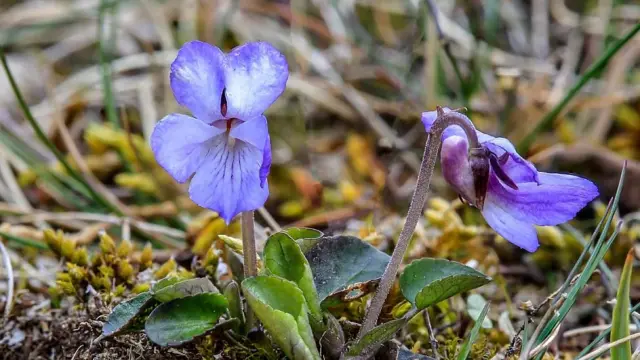
In Widdybank Fell, a hill known for its botanical richness, some plants have virtually disappeared, such as the dwarf polygala (Polygala amarella), with a 98% reduction.
Even the iconic flower of Teesdale, the small gypsy (Gentiana verna) – which in the UK is only found in this valley – has suffered a marked decline.
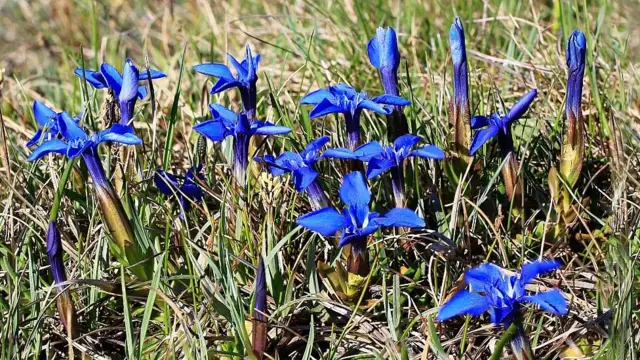
“The area covered by the well-known Gentiana verna has dropped 56% on Widdybank Fell,” Bradshaw said. The main cause of the decline has been the change in livestock grazing systems. The number of sheep in the Teesdale hills dropped dramatically decades ago when it was estimated that this area was overgrazed.
Bradshaw explains that while some high areas were damaged by the sheep, the reduction in grazing in Teesdale was devastating. By removing the sheep the grass reached a height that harmed the delicate flowers of the valley depriving them of light. “Most plants considered rare require light to grow; they cannot survive the shade, not even of adjacent vegetation 30 cm high,” the botany said.
Thanks to Bradshaw’s work with local farmers and institutions, the number of sheep is increasing and the timing of grazing is more carefully managed, which has allowed some plants to recover. “In the 21st century fluctuations in the intensity of the grazing of sheep and rabbits have been observed: the latter were reduced in number, while that of the sheep increased to a level that currently keeps the grassland at the optimal height for the survival of rare species.”
A big question is how climate change will affect the flora of Teesdale. Bradshaw said more data is still needed to get the answer.
“A Purpose in Life”
The botanist continues to work and raise funds for Teesdale Special Flora, the foundation it created in order to “generate awareness about the fragility of our special flora and the importance of protecting it.”
What is the secret of your longevity?
“My genes, especially those of my mother, who lived to be 95, just like her grandmother,” she said. She also talked about exercise, good eating and sleep, not smoking, drinking “a moderate amount of wine with meals,” and “a lot of fresh Teesdale air.”
“And a purpose in life that, for me, is the rare flora of Teesdale and its survival,” she told BBC World.
Bradshaw often crosses paths with visitors across the trail that crosses Widdybank Fell Hill and leads to a lake and waterfall.
And she makes them an invitation. “I encourage you to take off your headphones, to look at the sky, then to the far horizon and then to the nearest horizon.”
“And finally to what they have in front of them, to notice what they had not perceived,” the botany told BBC Mundo.
“I tell you: what can you hear?, what can you smell?, when stepping on the floor do you feel firm?, is it fluffy?, is it wet?, I invite you to taste the air and to observe what surrounds you.”
“I finally ask them, ‘How do you feel?’ I did this with an executive who looked very busy and I could feel the tension of his body slipping away.”
“Older than Stonehenge”
Bradshaw believes that we can all contribute to the conservation of plants. But it is essential that we worry about them, although many sometimes seem not to see them.
“People need to support local conservation. Write to your deputies and the government. Volunteer with a local group,” Bradshaw said.
Many Britons are unaware of Teesdale’s botanical wealth. “We have buildings and monuments like Stonehenge or Durham Cathedral; if they were falling apart there would be groups and money to help stop that.”
“These flower communities are much older than Stonehenge or Durham Cathedral, and, in some respects, more beautiful,” she said. For Bradshaw, “this one-time flora must be treasured”: “Once disappeared it cannot be replaced.”
Bradshaw has been the guardian of those flowers as fragile as she is unique for much of her life. She has taught numerous botanists and volunteers. And she knows that the challenge for the survival of her beloved flora in Teesdale continues.
Her book concludes with a message: “This is our heritage, this unique set of plant species, mine and yours. Despite trying I have not managed to avoid its decline; now it is up to you.”